Operational routines that keep properties strong
Housing quality habits reduce emergencies, protect residents, and keep properties performing year after year.
Housing quality habits often look boring on the calendar. However, bad habits on the property cause chaos. Emergency calls climb, turnovers drag, and complaints increase. As a reult, staff morale drops, and properties lose momentum.
Operational routines protect housing quality by creating predictability. Predictability reduces errors. Fewer errors preserve time, money, and resident trust. That combination keeps the building healthier for longer.
Strong habits do not require perfection. Consistency matters more. A property that repeats the right basics each week avoids many crises later in the year.
The operations that protect quality every week
A clear cadence of tasks keeps quality from becoming “urgent-only.” Weekly routines work because they fit into real schedules. Short huddles, simple checklists, and steady follow-up outperform heroic cleanup after problems explode.
Work order discipline sits at the center, and a clean intake process matters. Categorizing urgency matters, too. Documentation matters most when staffing changes or vendors rotate. Quality slips fast when notes are vague or missing.
Preventive maintenance also deserves protected time. Filters, inspections, and seasonal checks reduce failures that disrupt residents. Vendor accountability improves when expectations are written and tracked. A reliable schedule supports better pricing and faster response.
Key Takeaways
- Consistent routines prevent emergencies and reduce resident disruption.
- Work order discipline improves speed, quality, and accountability.
- Preventive maintenance lowers long-term costs and stabilizes performance.
- Make-ready standards protect revenue and strengthen reputation.
- Clear communication and documentation reduce conflict and repeat problems.
Turnover readiness can’t wait until the keys arrive. Unit standards should be defined in writing. Make-ready steps should be sequenced. Quality checks should be consistent, not person-dependent. Faster turns protect revenue. Better turns protect reputation.
Communication habits keep small issues from becoming public disputes. Residents respond better when updates arrive early and are clearly communicated. Staff stress drops when scripts exist for common scenarios. Calm messaging reduces conflict and builds trust.
How documentation keeps quality from slipping
Documentation is a quality tool, not a paperwork chore. A strong record shows what happened, when it happened, and why the decision made sense. That clarity protects the property during audits, disputes, and staff transitions.
Remember these things:
- Photos help when paired with context.
- Notes also help when tied to dates and actions.
- Checklists help when someone verifies completion.
Quality is easier to defend when the story is complete. Metrics should stay simple. Completion time for work orders, recurring issues by category, and turnover duration offer enough insight to improve. The trends reveal training needs while patterns reveal vendor gaps. Together, both reveal where quality is slipping.
Housing quality habits for frontline teams
Housing quality habits improve when the basics become automatic. Three moves make the biggest difference.
- First, standardize the start of the day. A 10-minute huddle clarifies priorities.
- Next, enforce close-out quality. A work order is not done until notes and proof are complete.
- Finally, track repeats. Repeated issues deserve root-cause action, not repeated repairs.
Housing quality habits that owners can support
Keep in mind, ownership support shows up in the unglamorous places. Investing in preventive maintenance keeps properties performing. A stable and well-trained staff protects the resident experience, and clear vendor standards keep timelines from slipping.
Quality improves fastest when expectations are documented and reinforced. Variation creates risk. Property managers reduce the risk with clarity.
Repeatable Outcomes
Operational routines protect quality by turning good intentions into repeatable outcomes. It may seem like a small habit, but strong properties rarely happen by accident.
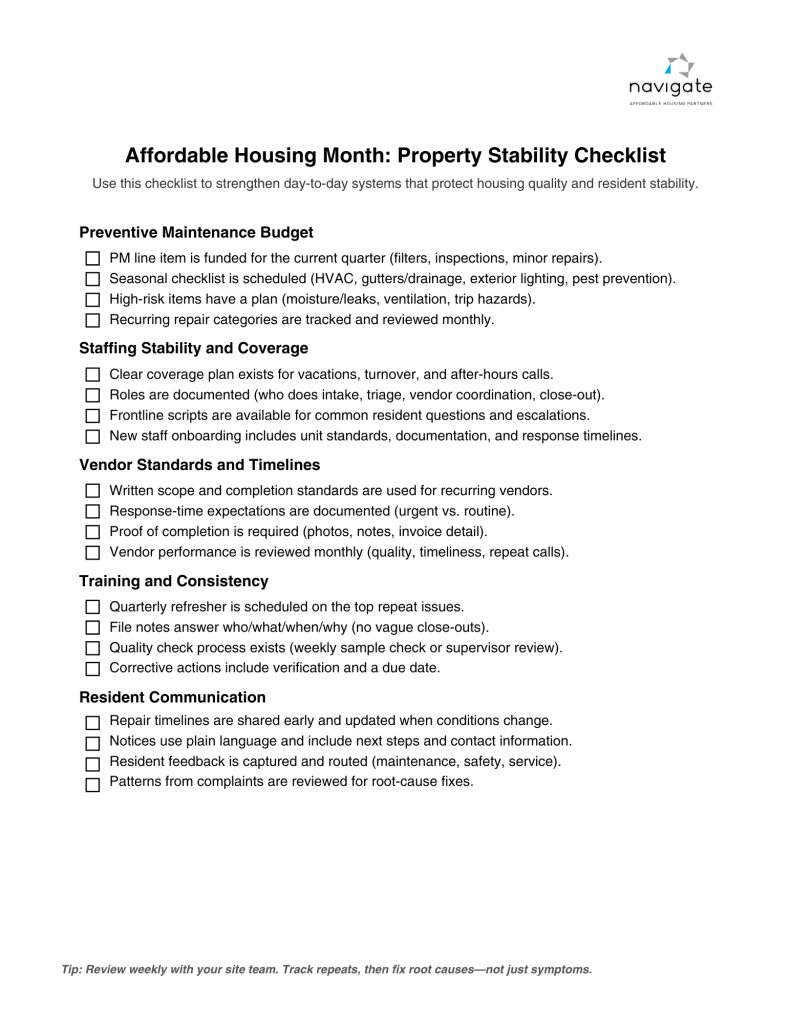
Download: Property Stability Checklist
Print it for your maintenance huddle or supervisor walk. Track repeats, then fix root causes—not just symptoms.