**This article was updated on March 13, 2026, to reflect HUD’s decision to delay implementation of the interim final rule.**
After this article was published, HUD announced it will indefinitely delay the effective date of the interim final rule revoking the 30-day notice requirement prior to lease termination for nonpayment of rent.
The interim final rule, originally published on February 26, 2026, was scheduled to take effect March 30, 2026. However, HUD has now stated it will treat the rule as a proposed rule instead, meaning the policy change will not take effect until after the public comment period and the publication of a final rule.
HUD cited recent litigation challenging the rule as the reason for the delay.
The proposed rule still seeks to return HUD’s regulations to their pre-2021 framework, which would remove requirements for PHAs and owners to include certain information in lease termination notices and eliminate language preventing notices from being issued before the day after rent is due.
The public comment deadline of April 27, 2026, remains unchanged. We will continue monitoring HUD guidance and update this article as additional developments occur.
HUD has revoked the federal 30-day notice requirement for lease termination due to nonpayment of rent. This change marks a major shift for multifamily housing owners and agents.
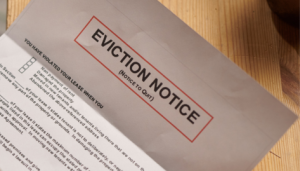
Effective March 30, 2026, HUD eliminates the mandatory 30-day notification period for public housing and project-based rental assistance (PBRA) programs. As a result, notice standards return to pre-2021 rules. Owners now have more flexibility when addressing rent delinquencies.
For PBRA properties, this change directly affects how and when you issue termination notices.
30 Day Notice: A Return to Previous Standards
The 2024 final rule required owners to provide at least 30 days’ notice before filing an eviction for nonpayment of rent. HUD has now rescinded that mandate. Going forward, you must follow your lease and applicable state and local law when determining notice timelines. HUD no longer enforces a uniform federal 30-day standard for rent delinquency cases. However, the 30-day notice requirement still applies when you terminate tenancy for “other good cause.” Therefore, you must clearly identify the legal basis for termination before issuing notice.
Nonpayment and “other good cause” now follow different notice standards. Precision matters.
Simplified Notice Requirements
HUD also reduced the content requirements for termination notices.
Previously, owners had to include cure instructions, income recertification information, hardship exemption details, and emergency rental assistance disclosures. Now, HUD requires far less. In nonpayment cases, your notice must simply state the amount owed and the date you calculated the balance. HUD also removed language that limited when you could serve notice relative to the rent due date. This adjustment restores procedural flexibility.
Overall, HUD streamlined the process. Owners can now align notices more closely with lease terms and state law.
Why HUD Reversed the 30 Day Notice Rule
HUD based this decision on ongoing financial strain across housing providers.
National Tenant Accounts Receivable levels remain more than 200 percent above pre-pandemic levels. As arrearages increased, owners reported operational challenges to HUD including:
- Growing rental delinquencies
- Slower unit turnover
- Longer waiting lists
- Increased pressure on maintenance, staffing, and insurance budgets
Therefore, HUD concluded that the extended 30-day notice requirement contributed to financial instability for housing providers. HUD also stated that it aims to reduce administrative and financial burden while preserving baseline tenant protections.
“Today, we are giving HUD-subsidized property managers the flexibility to enforce policies that best serve their constituencies,” said HUD Secretary Scott Turner. “This deregulatory action advances HUD’s mission of cutting red tape, promoting local flexibility, and increasing housing affordability by recognizing the case-specific needs that exist across rural, tribal, and urban communities.”
What This Means for Owners & Agents
Now, lease language and state landlord-tenant law fully control notice timelines for nonpayment cases.
Accordingly, you should review your lease documents. Then confirm that your delinquency procedures comply with state requirements. Finally, train staff to distinguish between nonpayment and “other good cause” cases.
Although HUD removed the federal 30-day mandate, compliance obligations remain. In fact, they require even greater attention at the property level.
March 30, 2026, will arrive quickly. Now is the time to act. Review policies. Update procedures. Ensure your approach to nonpayment cases reflects the restored regulatory framework.